Welcome to My Blog
Published:
Welcome to my blog! I’ll be sharing updates about my research and projects here.
Stay tuned for future posts!
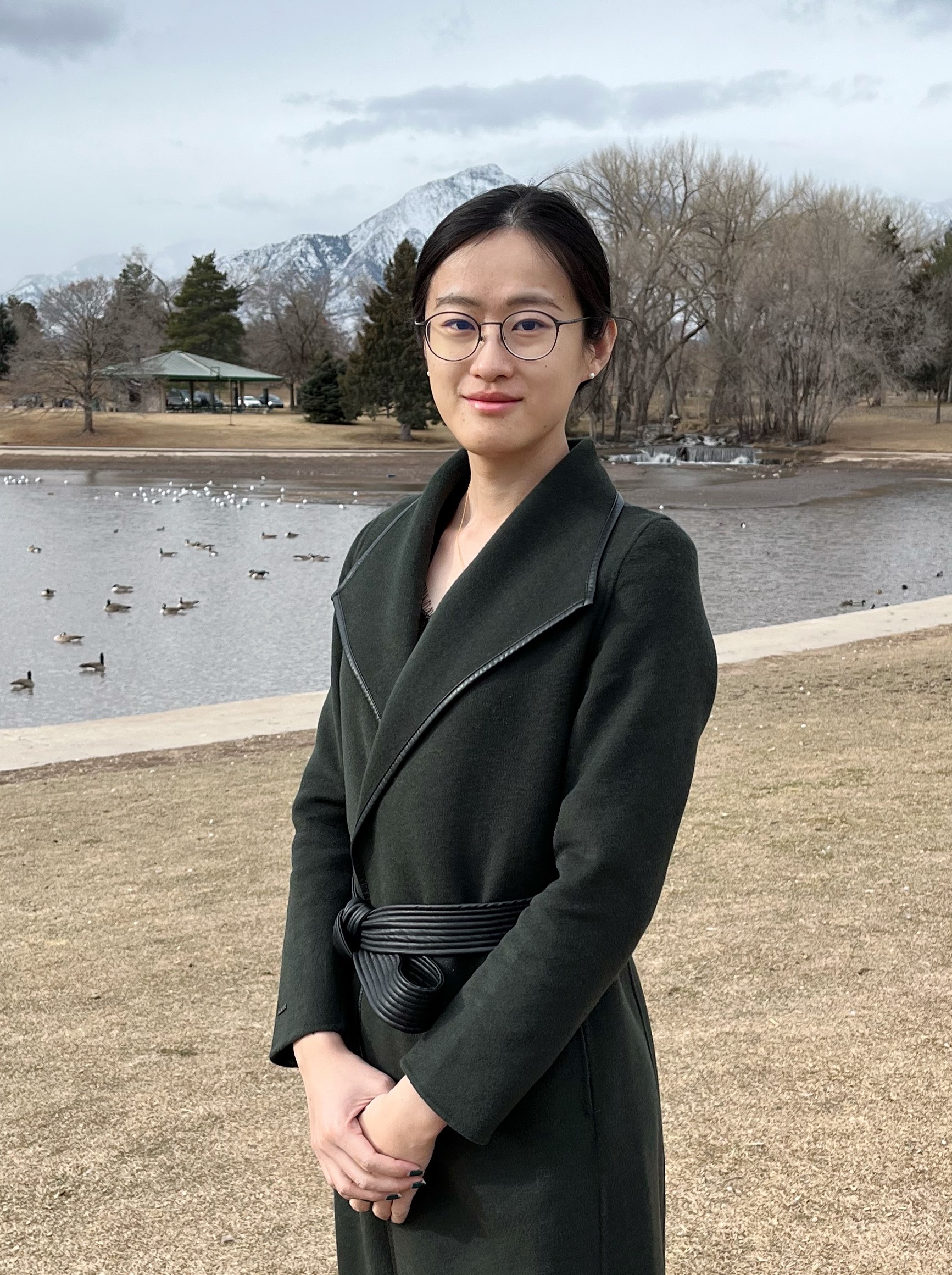
Research Scientist at NVIDIA. PhD in Computing from University of Utah. Specializing in physics-based simulation and computer graphics.
less than 1 minute read
Published:
Welcome to my blog! I’ll be sharing updates about my research and projects here.
Stay tuned for future posts!
11 minute read
Published:
VBD’s per-vertex 3×3 solve already gives the locally optimal descent direction — there is no leverage left inside a single block. So why does it still slow down on problems with high stiffness contrast? The answer turns out to be a story about what basis you descend in, and once that picture is in place the fix — a sparse coarse correction built from per-element eigenmodes — almost suggests itself.
5 minute read
Published:
A practical primer covering exactly the quaternion operations used in rigid body simulation, with reference to the Newton AVBD implementation. No proofs, just what you need to read the code.
14 minute read
Published:
This post derives the per-vertex 3×3 Hessian block for the stable Neo-Hookean tet material under VBD-style block Gauss-Seidel, and shows how it lands as an unconditionally PSD expression with no clamp or eigenvalue projection required. The derivation is short but the algebraic cancellation it relies on is easy to miss, so it is worth writing out in full. The post is meant as a reference for anyone wiring stable Neo-Hookean into a VBD solver.
18 minute read
Published:
In the VBD paper (SIGGRAPH 2024), we briefly discuss extending Vertex Block Descent to rigid body simulation. The idea is natural: instead of updating a single vertex with 3 DoF, you update an entire rigid body with 6 DoF. But the details matter. This post walks through the full derivation—from the continuous Newton-Euler equations, to discrete backward Euler as a nonlinear system, to the Schur complement solve you actually run each iteration—with reference code from Newton, which implements this approach under the name AVBD (Augmented VBD).
Leave a Comment