Welcome to My Blog
Published:
Welcome to my blog! I’ll be sharing updates about my research and projects here.
Stay tuned for future posts!
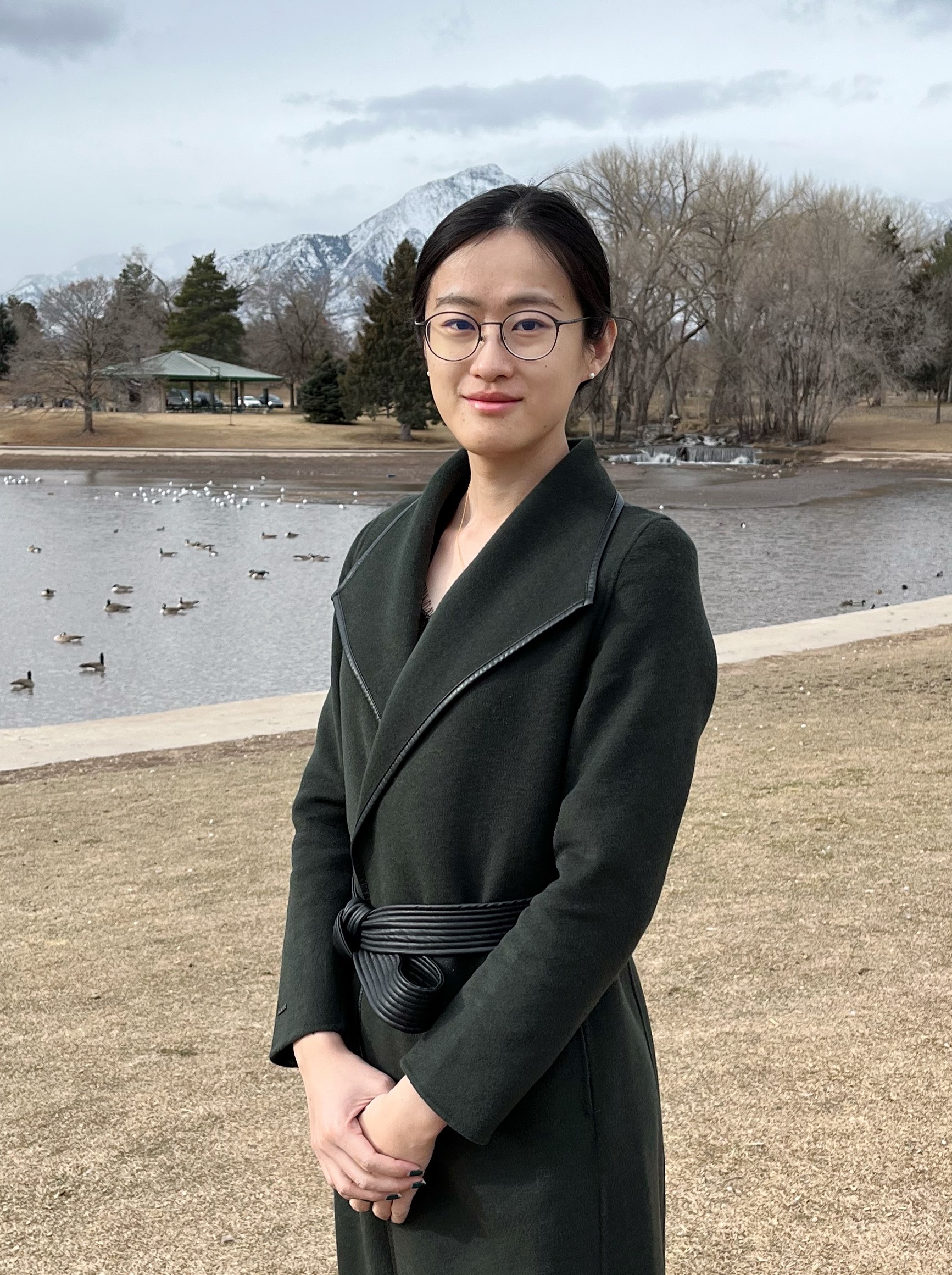
Research Scientist at NVIDIA. PhD in Computing from University of Utah. Specializing in physics-based simulation and computer graphics.
less than 1 minute read
Published:
Welcome to my blog! I’ll be sharing updates about my research and projects here.
Stay tuned for future posts!
13 minute read
Published:
In the VBD paper (SIGGRAPH 2024), we briefly discuss extending Vertex Block Descent to rigid body simulation. The idea is natural: instead of updating a single vertex with 3 DoF, you update an entire rigid body with 6 DoF. But the details matter. This post walks through the full derivation—from the continuous Newton-Euler equations, to discrete backward Euler as a nonlinear system, to the Schur complement solve you actually run each iteration—with reference code from Newton, which implements this approach under the name AVBD (Augmented VBD).
5 minute read
Published:
Vertex Block Descent (VBD) is a physics solver we published at SIGGRAPH 2024 for elastic body dynamics. It offers unconditional stability, excellent GPU parallelism, and fast convergence to implicit Euler solutions. While the paper covers the formulation comprehensively, actually implementing VBD correctly—especially the damping—turns out to be subtler than it first appears. This post discusses the key pitfalls and how to get them right, based on lessons learned during development with NVIDIA Warp.
Leave a Comment